
Early Treatment (Phase I)
A first check‑up by age 7
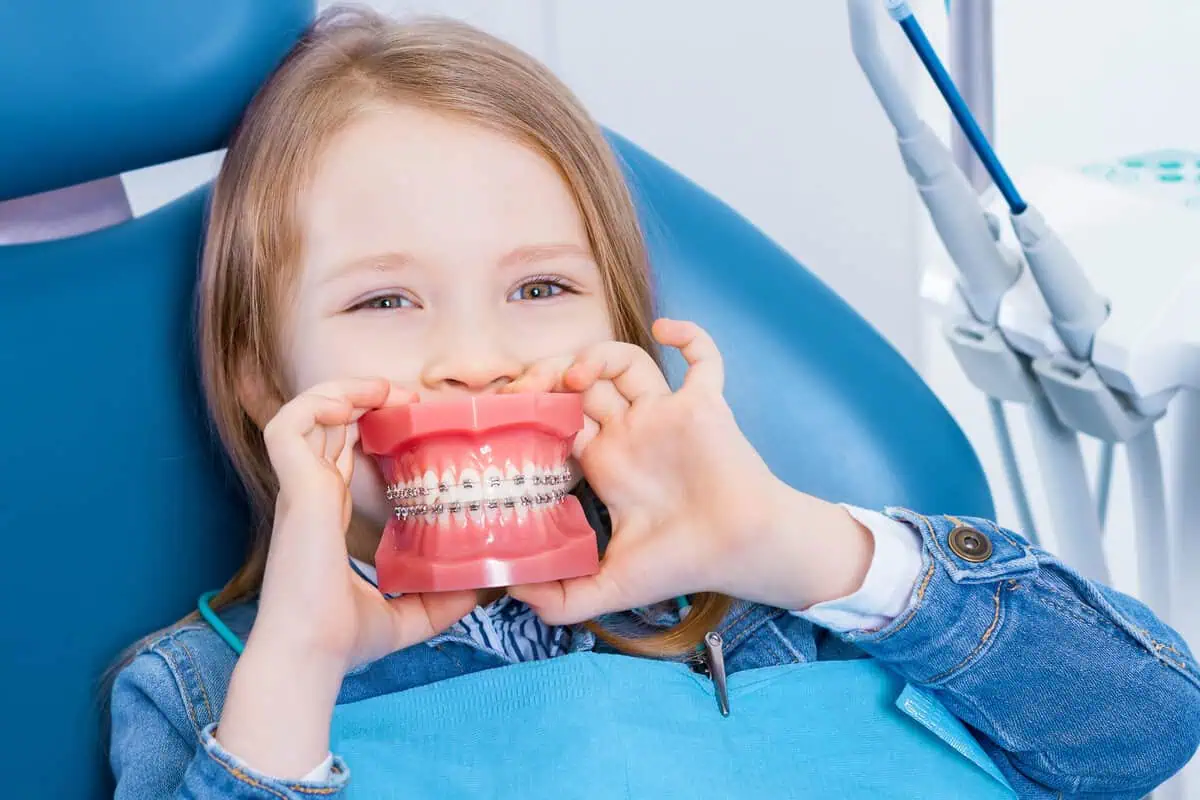
Orthodontists recommend kids get their first orthodontic check-up around age 7. Most won't need treatment yet, but catching certain problems early can make them much easier to fix.
Why so young?
Around age 7, kids have a mix of baby teeth and adult teeth, and their jaws are still growing. That gives Dr. Croft a window to spot issues like crossbites, crowding and jaw imbalances while growth can still be guided in the right direction.
Signs your child should come in
- Early or late loss of baby teeth
- Trouble chewing or biting
- Mouth breathing or snoring
- Thumb sucking after age 5
- Crowded, misplaced or blocked-out teeth
- Jaws that shift, click or sit off-center
- Front teeth that don't meet, or that sit behind the bottom teeth
What Phase I treatment looks like
If treatment is needed, Phase I is usually short and focused. It might involve an expander, a partial set of braces, or another appliance to correct a specific problem. Then we let growth take over and check in periodically until the rest of the adult teeth arrive.
Before & After
Caught early, fixed early
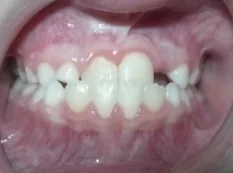 Before
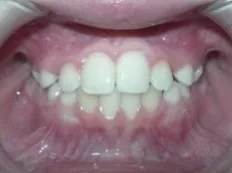 After
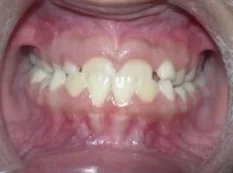 Before
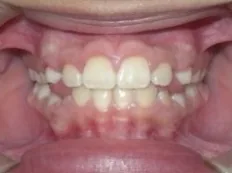 After
Common questions
Does every 7-year-old need braces?
No. Most kids who come in at 7 just need us to keep an eye on things. The check-up is about catching the few problems that are easier to fix early.
Will my child still need braces later?
Often, yes. Phase I handles the big structural issues. A shorter Phase II with braces or Invisalign may follow once all the adult teeth come in.
What happens at the first visit?
Dr. Croft takes a look at your child's teeth, bite and jaw growth, and explains what he sees in plain English. If nothing needs to happen yet, we'll simply plan a future check-in.